US Midterms 2026: Trump Cancels Kansas and Iowa Rallies as Polls Tighten

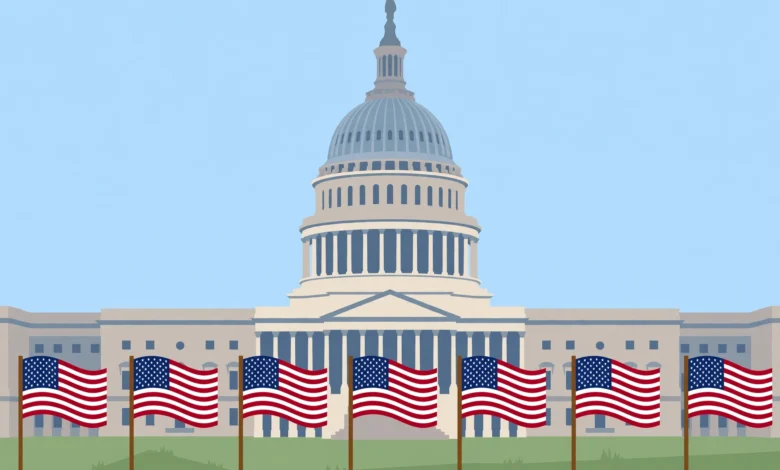
US midterms 2026 enter their final four days with a changed campaign map. President Donald Trump has cancelled weekend rallies in Kansas and Iowa, replacing them with telephone rallies across nearly 20 states, as polls show Democrats leading nationally and Senate races in both states far tighter than Republicans expected at the start of the cycle.
The Republican National Committee announced the cancellations on Thursday 29 October 2026. Trump had been due to appear in Salina, Kansas, and Dubuque, Iowa, over the weekend, but the party said those in-person events would no longer take place as scheduled. Trump is still due to hold a rally in Daytona Beach, Florida, on Friday, which would then be his final in-person rally of the campaign.
Voters go to the polls on Tuesday 3 November 2026 to elect all 435 members of the House of Representatives and 35 of the 100 senators, alongside 36 governors. Control of Congress for the second half of Trump’s term is at stake, and the president has urged Republicans to treat the election as if he were on the ballot himself.
US Midterms 2026 — Quick Reference Summary
| Item | Detail |
|---|---|
| Election day | Tuesday 3 November 2026 |
| Seats on the ballot | All 435 House seats; 35 Senate seats; 36 governorships |
| Current Senate control | Republicans 53, Democrats and Democrat-caucusing independents 47 |
| Current House control | Republicans 218, Democrats 214, with vacancies |
| Senate seats needed by Democrats | A net gain of four seats for a 51-seat majority |
| House majority mark | 218 seats |
| Rallies cancelled | Salina, Kansas, and Dubuque, Iowa (weekend events) |
| Replacement format | Tele-rallies across nearly 20 states |
| Final in-person rally planned | Daytona Beach, Florida, on Friday 30 October 2026 |
| National generic ballot (RealClearPolling) | Democrats 51.4%, Republicans 43.2% |
| Trump approval (Marquette, Wisconsin) | 37% approve, 61% disapprove |
Why the Kansas and Iowa stops were dropped
The official explanation was efficiency, not retreat. The Republican National Committee said that, with Republicans in a strong position in Kansas and Iowa, the in-person rallies were no longer needed as scheduled, and that tele-rallies would let Trump reach more voters in the limited time left before polls close.
Trump himself struck a different note when asked about Kansas. He said he did not feel he had to go to Kansas, and he pushed back sharply at a reporter who asked whether he was tired of travelling, insisting that he felt well. The exchange, reported by several outlets on 30 October, became part of the story because it came in the same week as questions about the pace of a campaign that has included 25 rallies in 19 states since 1 October.
The political context in both states explains why the cancellations drew attention. Kansas and Iowa were strongly favoured to stay Republican at the start of the cycle, yet both Senate races are now competitive. In Kansas, Republican Senator Roger Marshall faces Democratic challenger Adam Hamilton. In Iowa, Republican nominee Ashley Hinson faces Democrat Josh Turek. Trump has already visited both states in October, holding rallies in Sioux City, Iowa, on 22 October and in Park City, Kansas, on 19 October.
What the latest polls actually show in the US midterms 2026
National polling points to a Democratic advantage, but state polls tell a closer story. According to RealClearPolling, cited by Al Jazeera on 30 October, Democrats lead Republicans by 51.4% to 43.2% on the generic congressional ballot, a gap of 8.2 percentage points. That national lead does not by itself decide individual Senate seats, where local candidates and turnout matter more.
The Marquette Law School Poll, conducted in Wisconsin from 14 to 22 October and released on 28 October, put Trump’s approval rating at 37%, with disapproval at 61%. Charles Franklin, the poll’s director, told Al Jazeera that declining approval ratings and economic concerns are alarming Republicans. Polls are not perfect predictions of outcomes, Franklin warned, a caution that applies to every figure in this article.
In the key Senate races, recent surveys point in different directions depending on the pollster, which is why averages matter more than any single poll. A CNN survey released on 29 October put Democrat James Talarico at 49% against Republican Ken Paxton at 43% in Texas, and Democrat Abdul El-Sayed at 49% against Republican Mike Rogers at 42% in Michigan. In Kansas, the same round of CNN polling put Hamilton four points ahead of Marshall, 49% to 45%, among likely voters surveyed from 20 to 26 October.
| Race | Latest reported position | Source and caution |
|---|---|---|
| Kansas Senate | Hamilton 49%, Marshall 45% (CNN/SSRS, 838 likely voters, margin of error plus or minus 4.5 points) | Lead is inside or near the margin of error in some other polls; one survey gave Marshall a one-point edge |
| Iowa Senate | Hinson ahead by 0.5 points in the RealClearPolitics average; an earlier Marist poll (8-11 October) had Turek ahead 48% to 45% | Averages and individual polls disagree, so the race is rated a toss-up |
| Texas Senate | Talarico 49%, Paxton 43% (CNN) | One pollster’s snapshot, not a final result |
| Michigan Senate | El-Sayed 49%, Rogers 42% (CNN) | One pollster’s snapshot, not a final result |
| National generic ballot | Democrats 51.4%, Republicans 43.2% (RealClearPolling) | National vote share does not translate directly into seats |
That pattern — a clear national Democratic lead alongside tight state races — is consistent with a House flip being more likely than a Senate flip. Democrats need a net gain of four Senate seats to reach 51, and a 50-50 tie would leave Republicans in charge because Vice President JD Vance would cast tie-breaking votes. The Senate seats on the ballot are split 22 held by Republicans and 13 held by Democrats, which gives Democrats more targets but also less room for error.
Tele-rallies, the Florida finale and the final four days
The replacement plan is a virtual sprint. The Republican National Committee said Trump will hold a large number of tele-rallies in a series of states, while the campaign group MAGA Inc said it would host tele-rallies in at least 19 states, including Kansas and Iowa, before election day. The argument from the party is reach: one phone event can speak to voters in several states at once, whereas a single rally serves one city.
The Florida rally matters because it is now the last scheduled in-person event. Trump is due to appear at the Ocean Center in Daytona Beach on Friday, after which the campaign moves entirely to virtual events for its closing days. For candidates in Kansas and Iowa, the change means losing a presidential visit in the final weekend, even if they gain a slot on a multi-state call.
The economy remains the backdrop to that final push. The US economy grew 3.4% in the third quarter, according to the Bureau of Economic Analysis advance estimate, a stronger headline than forecasters expected. Yet household sentiment has remained downbeat, and that gap between national statistics and everyday prices is now central to both parties’ closing messages. Democrats have built their final campaign around affordability, covering groceries, fuel, housing and health care, while Republicans argue that voters should judge the full record rather than a single quarter.
What control of Congress would change after the US midterms 2026
Control of the House alone would give Democrats committee chairs and subpoena power, allowing far closer scrutiny of the administration for its final two years. Control of the Senate as well would let Democrats block judicial and cabinet nominees and stall legislation. If Republicans hold both chambers, Trump would keep a clearer path for his agenda, including budgets and further legislation, for the remainder of his term.
A separate legal dispute shows how contested the final days have become. The Justice Department has sought to block certification of Alaska’s Senate result if the incumbent loses narrowly, arguing that voters could be confused because two candidates on the ballot share almost identical names: incumbent Senator Dan S Sullivan and challenger Dan J Sullivan Jr. The department says the action is specific to Alaska, while critics have warned that it could set a wider precedent for post-election challenges.
None of that changes the basic arithmetic voters face on 3 November. Every House seat is contested, a third of the Senate is contested, and a small number of seats in a handful of states will decide whether the next two years bring divided government or continued Republican control. The cancelled rallies are a signal of how the campaign is adapting to that map, not a result in themselves.
Frequently asked questions
Why did Trump cancel the Kansas and Iowa rallies?
The Republican National Committee announced on 29 October that the weekend rallies in Salina, Kansas, and Dubuque, Iowa, would no longer take place as scheduled, and that Trump would instead hold tele-rallies across nearly 20 states. The party said Republicans were in a strong position in both states and that virtual events would reach more voters in the final days.
When are the US midterms 2026?
Election day is Tuesday 3 November 2026. All 435 House seats, 35 Senate seats and 36 governorships are on the ballot.
Who is leading in the national polls?
RealClearPolling put Democrats ahead of Republicans by 51.4% to 43.2% on the generic ballot, according to Al Jazeera‘s 30 October summary. That is a national figure, not a seat forecast, and individual state races are closer.
What do the Kansas and Iowa Senate polls show?
In Kansas, a CNN/SSRS poll of likely voters put Democrat Adam Hamilton at 49% and Republican Senator Roger Marshall at 45%, but other polls have been closer and one gave Marshall a small lead. In Iowa, the RealClearPolitics average put Republican Ashley Hinson 0.5 points ahead of Democrat Josh Turek. Both races are rated toss-ups.
Will Trump hold any more in-person rallies?
Trump is still due to hold a rally in Daytona Beach, Florida, on Friday 30 October 2026. After that, the campaign’s closing events are planned as tele-rallies, according to the Republican National Committee.
Do polls guarantee the result?
No. Polls are snapshots with margins of error, and turnout on election day can differ from polling samples. As Marquette poll director Charles Franklin warned, polls are not perfect predictions of outcomes.